Addie: The Precision Hairline Font for Modern Crafters
In the world of digital crafting and precision design, the tools you choose define the quality of your output. If you have ever struggled with fonts that bleed into a mess of vinyl or leave your sketch pen projects looking unfinished, the Addie typeface offers a specific, elegant solution. This is not just another decorative font; it is a specialized asset engineered for the intersection of technology and artistry. Designed with a distinct hairline weight, Addie bridges the gap between a standard typeface and a functional design tool, particularly for users of laser cutters and cutting machines.
The Anatomy of a Hairline Typeface
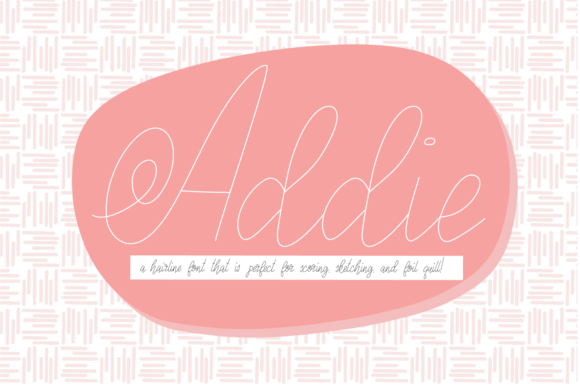
At first glance, Addie presents itself as a delicate, minimalist sans serif font. Its visual style is characterized by uniform line thickness and a quirky, geometric personality. However, the true innovation lies in its construction. Unlike traditional fonts designed for inkjet printing or digital screens, Addie is built specifically for line-based output methods. When you are working with a scoring stylus on a Silhouette or Cricut, or using a foil quill, a standard font often results in outlines. You end up with a hollow center in your letters, requiring tedious manual editing to fill them in.
Addie solves this problem through its hairline construction. It is designed to be used with no-fill and a specific line color in your design software. The result is a single-path stroke that renders as a solid, continuous line. This ensures that when the machine scores or sketches, the letter appears solid without the "center void" common in standard typography. For makers using a Glowforge for engraving, this precision is equally vital, ensuring crisp, clean results on wood, acrylic, or leather.
Practical Applications in Design and Branding
While its primary function is technical, the aesthetic appeal of Addie allows it to shine across various creative projects. Its clean, modern typography style makes it an excellent choice for delicate branding elements. Imagine a high-end skincare brand using Addie for subtle scoring on textured box packaging. The tactile experience of a scored line adds a layer of sophistication that flat printing cannot replicate.
For entrepreneurs and small business owners, this typeface is a powerful design asset for creating:
- Paper Crafting: Perfect for wedding invitations, greeting cards, and envelopes where sketch pens are used to mimic hand-drawn calligraphy.
- Packaging Design: Ideal for scoring folding lines on custom boxes or adding subtle, embossed-style text to product tags.
- Home Decor: Excellent for engraving quotes on wood signs or etching designs onto glassware where a fine, solid line is required.
- Web Design and Social Media: While optimized for physical output, Addie’s unique hairline weight also works beautifully for minimalist headlines in digital layouts, provided it is used at larger sizes.
It is important to note that Addie is a specialized premium font. It was derived from the letters of the Ashleigh font but adapted for this specific technical purpose. Because of this unique construction, it may appear different in standard font previewers or word processors. It is not intended for standard body text or print documents; its magic is revealed only when utilized with the appropriate crafting machinery.
Integrating Addie into Your Workflow
Successfully implementing Addie requires a shift in how you typically approach typography. As a designer or content creator, you are likely used to selecting a font, typing, and printing. With Addie, you are engaging in a process closer to vector illustration.
Font Pairing and Visual Hierarchy
Because Addie is so thin and delicate, it demands a bold companion. Creating visual hierarchy is essential when using hairline fonts. If you use Addie for a headline, pair it with a heavy sans serif font or a bold serif font for the body text. This contrast creates a dynamic layout where the delicate scoring of Addie draws the eye, while the heavier text provides readability and substance. For example, pairing Addie with a geometric sans serif like Montserrat or a classic serif like Playfair Display creates a balanced, professional aesthetic.
Technical Considerations and Licensing
Before purchasing or downloading, ensure that the commercial font licensing aligns with your business needs. If you are creating physical products to sell—such as engraved jewelry or scored stationery—standard desktop licenses are often sufficient, but it is always best to verify the specific terms for the Addie typeface.
When testing the font, always run a small pilot project. Load the file into your specific software—whether it is Cricut Design Space, Silhouette Studio, or a laser cutter interface. Verify that the "no-fill" setting renders the letter as a solid line on your screen before you begin the physical scoring or engraving process. This step prevents material waste and ensures the final product matches your brand identity standards.
Ultimately, Addie