Patan: Crafting Authentic Retro Narratives in Design
The Anatomy of a Timeless Typeface
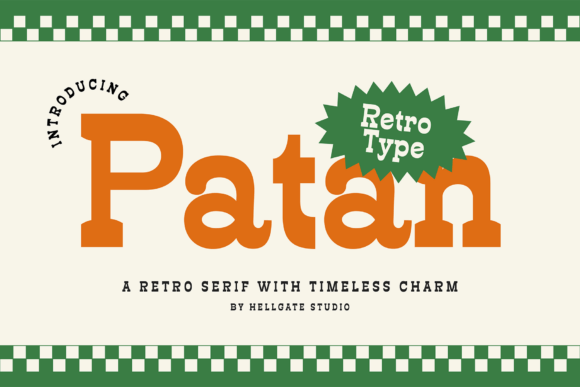
When we talk about Patan, we are discussing more than just a collection of glyphs; we are looking at a carefully engineered tool for visual storytelling. In the current landscape of modern typography, where many designs lean toward the sterile and the geometric, Patan offers a return to warmth and character. It functions as a distinct retro serif font, but its versatility extends far beyond simple nostalgia. The typeface is imbued with a charming demeanor that balances legibility with personality. It avoids the stiffness of corporate serifs while steering clear of the chaotic nature of some display fonts. Instead, it sits in a sweet spot that makes it incredibly useful for designers who need a premium font that feels established and trustworthy yet carries a creative edge.
The visual characteristics of Patan are defined by its thoughtful construction. You will notice the subtle variations in stroke width and the carefully considered terminals that give it that classic, retro-inspired flair. This isn't a font that tries to scream for attention; rather, it invites the reader in. The serif font structure provides the necessary anchor for body text, ensuring that longer passages remain readable, while the unique stylistic details shine when used in headlines or pull quotes. For the creative professional, this means you can use a single typeface family to create a cohesive visual hierarchy without the project looking monotonous.
Integrating Patan into Brand Identity and Packaging
One of the most significant challenges in logo design and brand identity is finding a typeface that conveys the "soul" of the business. Patan excels in this area, particularly for brands that want to project an image of craftsmanship, heritage, or artisanal quality. If you are working on packaging design for a specialty coffee roaster, a boutique distillery, or a handmade candle brand, this font provides the perfect visual shorthand. It tells the consumer that care went into the product before they even open the package.
Because Patan is so customizable, it allows for smooth adjustments in color and weight. This is crucial when adapting a brand across different media. For example, the bold weight might work perfectly for a stamp on a paper bag, while a lighter weight could be utilized for the fine print on the back label. The font’s ability to maintain its integrity across these different applications ensures brand consistency. It prevents the jarring experience where a brand looks high-end on a website but cheap on a physical product. Using Patan helps bridge the gap between digital and print assets, ensuring that the brand perception remains professional and recognizable.
Practical Applications: From Web Design to Social Media
In the realm of web design, readability is king, but style is the queen that keeps the court entertained. Patan serves as an excellent choice for editorial layouts, blog headers, and landing pages that need to convert visitors through storytelling. When paired correctly with a clean sans serif font for UI elements and navigation, Patan can handle the heavy lifting of content presentation. It provides a rhythm to the text that guides the eye naturally down the page, improving engagement metrics by keeping readers on the content longer.
For social media graphics, where attention spans are measured in milliseconds, a creative font like Patan is invaluable. It cuts through the noise of generic templates. Whether you are creating an Instagram story, a Pinterest pin, or a Facebook cover, the distinct personality of this typeface helps establish instant recognition. It works exceptionally well for quotes, announcements, and promotional banners where the text itself is the focal point of the image. The retro aesthetic also taps into current design trends that favor vintage vibes, making your content feel timely yet timeless.
Mastering Font Pairings and Project Fit
Choosing the right font pairing is a skill that separates amateur layouts from professional designs. Patan is versatile, but it shines brightest when contrasted correctly. Because it has a strong personality, it pairs beautifully with neutral sans serifs or even subtle script fonts for accent text. Avoid pairing it with other highly decorative serifs, as this can create visual clutter. The goal is to let Patan be the voice of the design while the supporting typeface acts as the stage.
When evaluating if Patan is the right fit for your project, consider the emotional response you want to evoke. If your goal is to convey futuristic minimalism, this might not be the tool. However, if you are targeting an audience that appreciates authenticity, history, or handcrafted quality, Patan is likely the ideal solution. It is particularly effective for:
- Editorial Design: Magazine headers and article titles that demand attention.
- Marketing Materials: Brochures and flyers for lifestyle brands.
- Publishing: Book covers, especially in genres like mystery, history, or romance.
- Personal Projects: Invitations, greeting cards, and scrapbooking.
Licensing and Technical Considerations
Before finalizing your design, it is essential to review the technical aspects and licensing of your design assets. As a commercial font, Patan comes with licensing that typically covers a wide range of uses, but you should always verify the specific terms for your project scope—whether it is for a single client, a large corporation, or a personal hobby. Ensure you have the correct license for web embedding if you plan to use it on a live site.
Additionally, take advantage of the included styles. A robust typeface family will often include various weights and possibly stylistic alternates. Testing these variations during the design phase is crucial. Check how the font renders on different screens and in different print resolutions. While Patan is engineered for quality, screen rendering can vary. By taking the time to test and tweak, you ensure that the final product—whether it is a business card or a billboard—looks exactly as intended. This attention to detail is what ultimately elevates a project from good to exceptional.