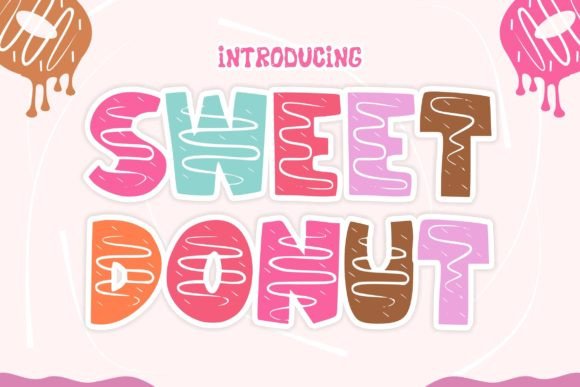
Sweet Donut: A Fun Font for Creative Brands
There’s a specific feeling you get when a design just clicks. It’s a mix of relief and excitement—the moment you realize you’ve found the missing piece. For many projects, that piece is a typeface with the right personality. I’ve spent years sifting through font libraries, from serious serif fonts to clean sans serif families, looking for that perfect match. And sometimes, you just need something that doesn’t take itself too seriously. You need something that brings a genuine smile. That’s where a creative font like Sweet Donut enters the conversation.
It’s not trying to be a neutral workhorse. Sweet Donut is a display font with a distinct personality. Its visual character is rooted in a modern, rounded style that feels both approachable and energetic. The letterforms have a soft, almost puffy quality, reminiscent of the treat it’s named after, but with a clean, contemporary structure that keeps it from looking childish. The curves are generous, and the overall rhythm is bouncy without being chaotic. It’s the kind of typeface that injects a dose of whimsy and fun into a layout instantly. Think of it as a design asset that carries its own vibe—a pop of visual joy that can set the tone for your entire project.
Where Does a Font Like This Shine?
The real question for any designer or business owner isn’t just “what does this font look like?” but “where will it work?” A font with this much character needs the right context to truly thrive. It’s a specialist, not a generalist, and that’s its strength. Using Sweet Donut for the body text of a 300-page novel would be a mistake, but applying it to a headline for a children’s party supply store? That’s a perfect fit.
Its strengths lie in projects that aim to communicate fun, creativity, and a touch of playfulness. This makes it an excellent choice for a range of applications. In logo design, it can establish a brand identity that feels friendly and memorable, especially for businesses in the food, lifestyle, or entertainment sectors. Imagine a bakery, a frozen yogurt shop, or a kids' activity center using Sweet Donut in their logo—it immediately tells you what kind of experience to expect.
Beyond logos, this font is a natural for packaging design. On a snack bag, a coffee cup sleeve, or a jar of artisanal jam, its rounded, soft-spoken forms can make a product feel more inviting and less corporate. It works beautifully for social media graphics, where you have mere seconds to grab attention. A bold header in Sweet Donut on a promotional post for a weekend sale or a new blog article can stop the scroll and convey energy. For editorial design, think magazine pull quotes, chapter titles in a cookbook, or headings in a lifestyle blog. It adds visual interest without overwhelming the page.
Entrepreneurs and small business owners will find it particularly useful for creating a cohesive brand identity across various touchpoints. Use it on your website’s call-to-action buttons, in your email newsletter headers, and on your product tags. It’s also a fantastic choice for personal projects like custom stickers, party invitations, or scrapbooking layouts. The key is to deploy it where its personality can enhance, not distract from, your message.
Making Sweet Donut Work in Your Designs
Finding a great font is one thing; using it effectively is another. Integrating a display font like Sweet Donut into your design system requires a bit of strategy to maintain professionalism and readability.
The most critical principle is contrast and pairing. Because Sweet Donut has such a strong personality, it pairs best with a simpler, more neutral typeface. A classic sans serif font like Helvetica, Arial, or a clean geometric sans is often an ideal partner. Use Sweet Donut for headlines, subheadings, or short, impactful phrases. Then, use your chosen sans serif for body copy and longer paragraphs. This creates a clear visual hierarchy: the display font draws the eye and sets the mood, while the sans serif ensures comfortable reading for the detailed information. Avoid pairing it with another highly stylized script font or a handwritten font, as the designs will compete for attention and create visual clutter.
Before committing, always test for readability. View the font at the actual size you intend to use it. A typeface that looks charming at 72 points on a poster might become illegible at 14 points on a mobile screen. Check the clarity of letterforms, especially for characters like lowercase ‘a’, ‘e’, and ‘g’. Does it remain clear and distinct? Also, consider the tracking (the space between letters). Sometimes, adding a tiny bit of extra tracking can improve legibility for display text.
Finally, understand the licensing. Sweet Donut is a commercial font, which typically means you need to purchase the correct license for your specific use case. If you’re a designer creating a logo for a client, you’ll need a license that covers that commercial end-use. If you’re a business owner using it on your own products and marketing materials, you need a license for that as well. Always read the EULA (End-User License Agreement) to ensure you’re compliant. This is a non-negotiable part of using professional design assets ethically and legally.
In the end, a font like Sweet Donut is a tool for storytelling. It helps you craft a narrative of joy and creativity before a single word is read. Used thoughtfully, it can elevate a project from ordinary to delightful, making your brand more recognizable and your designs more engaging. It’s a reminder that typography isn’t just about legibility; it’s about emotion and connection. When you find the right typeface, it doesn’t just hold your words—it amplifies their meaning.